
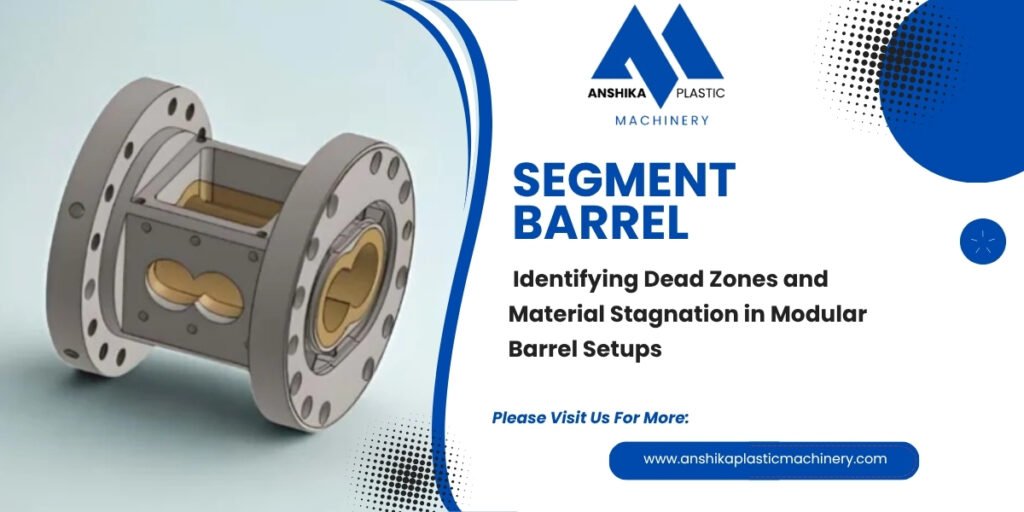
In continuous polymer compounding and extrusion, maintaining a smooth, continuous flow path from the feed throat to the die head is critical. When polymer material gets trapped in localized pockets or slow-moving areas, it lingers far beyond its intended residence time.
These hidden traps—known as dead zones—cause severe thermal degradation, discoloration, and polymer cross-linking. Over time, this degraded material breaks loose, resulting in black specs, streaks, and structural weak points in your finished product.
1. What Causes Dead Zones in Modular Extruders?
Dead zones rarely happen by accident; they are typically the result of mechanical misalignment, incorrect element matching, or wear within the processing envelope.
Gap Mismatches at Modular Junctions: When individual sections of the segment barrel are bolted together, even microscopic misalignments or gasket over-extensions can create tiny ledges where polymer catches and refuses to move.
Improper Stagger Angles on Kneading Blocks: If your kneading elements are configured with incorrect staggering angles or reversed blocks placed out of sequence, forward momentum stalls, creating stagnant localized vortexes.
2. Recognizing the Symptoms on the Plant Floor
Catching material stagnation early saves hours of troubleshooting and prevents wasted raw material batches.
Unexplained Discoloration and Specks: If you notice intermittent yellowing, brown streaks, or hard carbon specks in your extruded profile while running virgin resin, polymer is burning somewhere in the barrel.
Unstable Melt Temperature Readings: Trapped material often overheats due to prolonged frictional shear, causing localized hot spots that register on barrel thermocouples.
Unpleasant Odors or Outgassing: Severe thermal degradation often releases volatile fumes or smoke from vacuum vent ports.
3. Engineering Solutions to Eliminate Flow Traps
Resolving stagnation requires a combination of precise mechanical alignment and optimized component design.
Verify Barrel Concentricity: During routine maintenance, check that adjacent segment barrel bores line up perfectly without internal lips or stepping.
Optimize Screw Geometries: Ensure that your conveying elements transition smoothly into mixing zones without creating abrupt volumetric expansions that cause material to tumble backward and stagnate.
To upgrade your processing line with components designed for seamless, uninterrupted polymer flow, explore our precision-machined Screw Elements built to prevent material buildup.
4. Best Practices for Purging and Cleaning
When dead zones are suspected, a thorough teardown and cleaning protocol is required.
Use High-Performance Purging Compounds: Run high-viscosity, glass-filled or specialized chemical purging agents through the system at recommended temperatures to scour out stagnant pockets before changing colors or materials.
Inspect Flight Edges During Screw Pulls: During your scheduled maintenance extractions, look closely at the root and flanks of your screw elements for baked-on polymer layers that indicate slow-moving boundary layers.
For robust, high-tolerance machinery parts that maintain clean flow paths across demanding compounding cycles, discover our complete range of Twin Extruder Components.