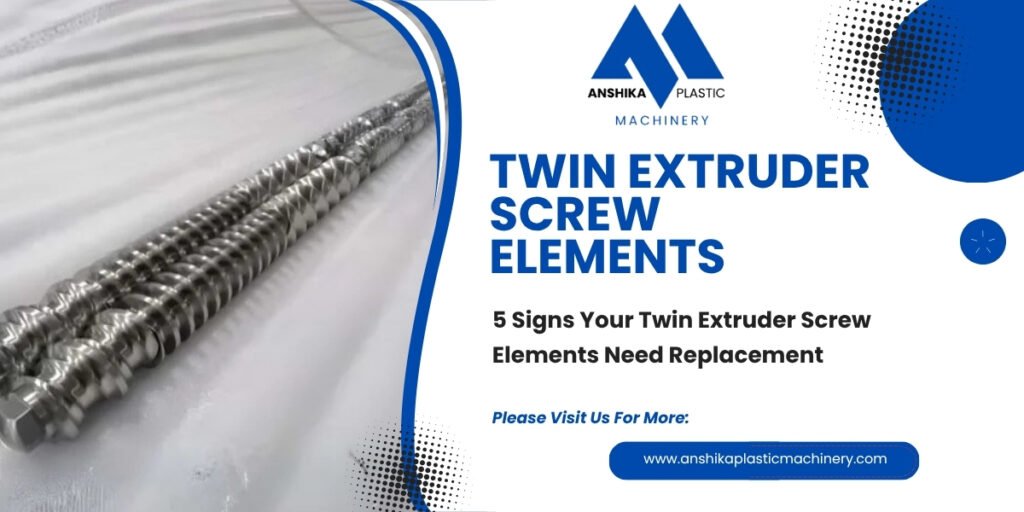
In high-performance compounding, your screw elements are the heartbeat of the operation. Even minor wear in the flight geometry can lead to significant drops in product quality and throughput. If you are noticing efficiency gaps, it might be time to inspect your components.
1. Inconsistent Material Dispersion
Are you seeing streaks or un-melted pellets in your final product? As kneading elements wear down, their ability to apply shear force decreases. If the mixing intensity is off, your product quality will suffer regardless of your temperature settings.
2. Drop in Throughput Capacity
A worn screw profile often leads to “back-flow,” where material slips backward rather than being conveyed forward. If your machine is running at the same RPM but outputting less material than it did six months ago, your conveying elements are likely losing their profile edge.
3. Increased Motor Torque
When screw elements are damaged or misaligned, they create internal resistance. This causes the extruder motor to work harder, consuming more power and risking gearbox fatigue.
4. Excessive Vibration and Noise
Mechanical wear isn’t just a performance issue; it’s a hardware issue. If you notice unusual vibrations, the clearance between your co-rotating screw elements may have widened, leading to unstable rotation.
5. Visible Surface Wear and Pitting
Periodic visual inspections are essential. If you see signs of pitting, cracking, or severe erosion on your spline shaft interface or the screw flights themselves, it is time for a replacement to prevent a catastrophic failure during production.
How to Restore Your Efficiency
Don’t let worn components bring your production line to a halt. At Anshika Plastic Machinery, we specialize in precision-engineered components designed to withstand the toughest extrusion environments.