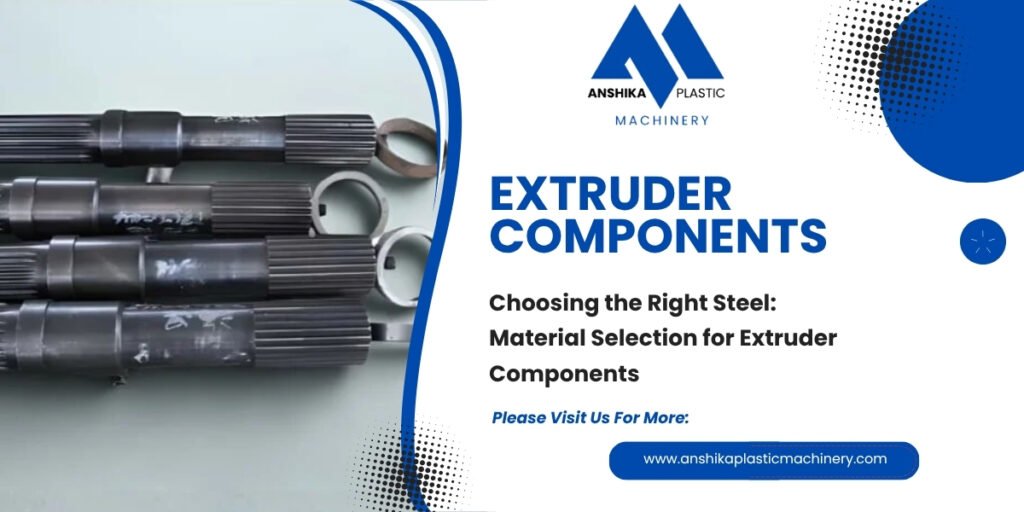
In the industrial world of twin-screw extrusion, there is a common trap that many manufacturers fall into: assuming that “harder” always means “better.” When your screw elements or segment barrels begin to show wear, the instinct is to simply replace them with the hardest steel available.
However, in reality, material selection is a delicate balance of hardness, toughness, and corrosion resistance. Choosing the wrong material can lead to brittle failure—where components crack instead of wearing down—or rapid chemical degradation.
Understanding the Triple-Threat of Extrusion
Your extruder components face three distinct enemies. Choosing the right material depends entirely on which of these three is the primary driver of your wear:
1. Abrasive Wear (The Grinder)
If you are processing glass-filled polymers, mineral-filled compounds, or recycled plastics, you are dealing with abrasive particles. These act like tiny grinding wheels against your screws.
Best Material: You need high-carbon, high-chrome tool steels or specialized bimetallic alloys. These materials maintain their hardness even at elevated processing temperatures.
2. Adhesive/Frictional Wear (The Scraper)
This occurs when the screw interacts with the barrel wall under high pressure. Even with precise tolerances, there is always some level of contact.
Best Material: You need materials with excellent self-lubricating properties or high resistance to “galling.” Nitrided steels are often excellent here, as they create a hard, ceramic-like surface layer that resists metal-to-metal welding.
3. Corrosive Wear (The Chemist)
Processing PVC, flame-retardant polymers, or materials with acidic catalysts creates a corrosive environment that eats away at standard steel.
Best Material: Standard tool steel will fail here. You require stainless or high-nickel alloy steels that are inherently resistant to chemical oxidation.
The Role of Heat Treatment
The raw material is only half the story. The heat treatment process (hardening and tempering) defines the final microstructure of the steel.
Through-Hardening: Ensures the component is hard from the surface to the core. This is excellent for structural integrity but can sometimes reduce toughness.
Surface Hardening: Provides a rock-hard exterior (to resist abrasion) while keeping the core slightly softer (to absorb shock and prevent snapping). This is often the “Goldilocks” solution for kneading elements that need to handle high torque without snapping.
When to Upgrade Your Material
If your components are failing every few months, do not just reorder the same part number. Consult with your supplier about an upgrade. Ask yourself:
Am I processing more abrasive fillers than I was a year ago?
Has my resin changed, perhaps becoming more corrosive?
Are my components snapping (brittle) or wearing thin (abrasion)?
If you are snapping parts, you need more toughness. If you are wearing parts thin, you need more surface hardness.
The Anshika Commitment to Metallurgy
At Anshika Plastic Machinery, we don’t treat components as generic “spare parts.” We analyze your specific material list to recommend the most cost-effective alloy. Whether you need the extreme wear resistance of high-chrome alloys or the corrosion-fighting power of specialized stainless steels, we have the manufacturing expertise to deliver.
We believe that your components should last as long as the machine itself. By selecting the right metallurgy, we help you reduce the frequency of your maintenance cycles and keep your production lines moving.
Let’s Optimize Your Extruder Life
Don’t let subpar material choices keep you in a cycle of constant replacement. Contact our technical team today for a metallurgical audit of your current screw profile.