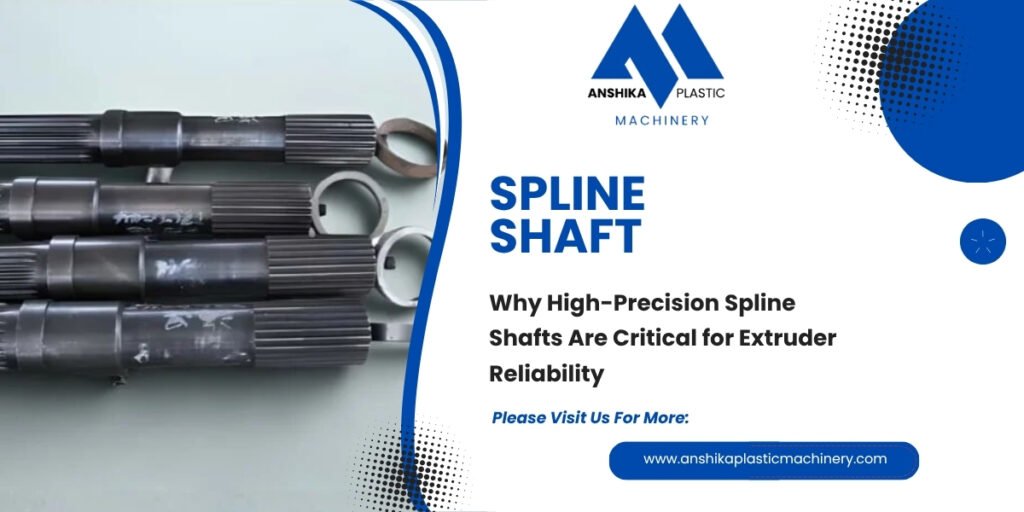
In the complex mechanical system of a twin-screw extruder, the spline shaft is the unsung hero. It is the backbone that transmits torque from the gearbox to your screw elements. While the screw elements themselves get all the attention for mixing and melting, the shaft is the foundation upon which those elements rely to operate at thousands of RPMs under immense pressure.
If your extruder is suffering from unexplained vibration, gear noise, or frequent element failure, you might be looking at a symptom rather than the root cause. Often, the issue lies in the precision and durability of the spline shaft.
The Role of Torque Transmission
The primary function of the spline shaft is to deliver high torque to the co-rotating screw elements without slipping or twisting. Because twin-screw extruders are designed for high-load compounding, any deviation in the shaft’s fit can be catastrophic.
When a spline shaft is manufactured to loose tolerances, “play” or “backlash” develops between the shaft and the internal spline of the screw elements. This movement causes:
Micro-Vibrations: Constant, high-frequency vibrations that ripple through the entire extruder.
Uneven Wear: The elements begin to wobble, leading to uneven wear on the flight tips and the inner barrel walls.
Reduced Torque Efficiency: Energy meant for processing the polymer is wasted in overcoming the mechanical inefficiency of the loose interface.
The Metallurgy of Durability
A spline shaft operates in a high-stress environment, often surrounded by high-temperature, corrosive, or abrasive materials. At Anshika Plastic Machinery, we emphasize that a spline shaft must be made from high-grade alloy steel that has been correctly heat-treated.
Why does the material grade matter?
Torsional Strength: The shaft must be able to flex slightly under extreme load and return to its original shape without permanent deformation.
Surface Hardness: The splines themselves must be hardened to resist “shearing off” when the extruder encounters a high-viscosity material or a startup surge.
Fatigue Resistance: An extruder that runs 24/7 requires a shaft that can withstand millions of cycles without developing micro-cracks that lead to catastrophic failure.
Troubleshooting: When to Inspect Your Shaft
Maintenance managers should treat the spline shaft as a critical inspection point during every major machine overhaul. Watch for these warning signs:
Difficulty in Installing Elements: If you find that new kneading elements are becoming harder to slide onto the shaft, it may indicate that the splines are starting to twist or “deform” due to torque overload.
Excessive Gearbox Noise: Noise often travels from the interface between the shaft and the gearbox. If the shaft has developed play, you will hear a distinct metallic “clunk” during start-up or when the extruder speed changes.
Vibration at High RPM: If your extruder runs smoothly at low speeds but vibrates violently at operational speeds, the shaft’s balance or spline integrity is likely compromised.
The Anshika Advantage: Precision You Can Rely On
At Anshika Plastic Machinery, we specialize in manufacturing Spline Shafts that meet or exceed OEM specifications. We understand that a “close fit” is not good enough; our manufacturing process focuses on the exact spline geometry required to ensure zero-backlash torque transmission.
When you invest in a high-precision shaft, you aren’t just buying a piece of steel—you are buying peace of mind for your production line. You are ensuring that your motor’s power is translated into effective material processing, not wasted energy.
Secure Your Production Line
Don’t wait for a shaft failure to bring your entire production line to a halt. If you are experiencing unusual vibration or suspect that your current shaft is losing its torque capacity, we are here to help.